


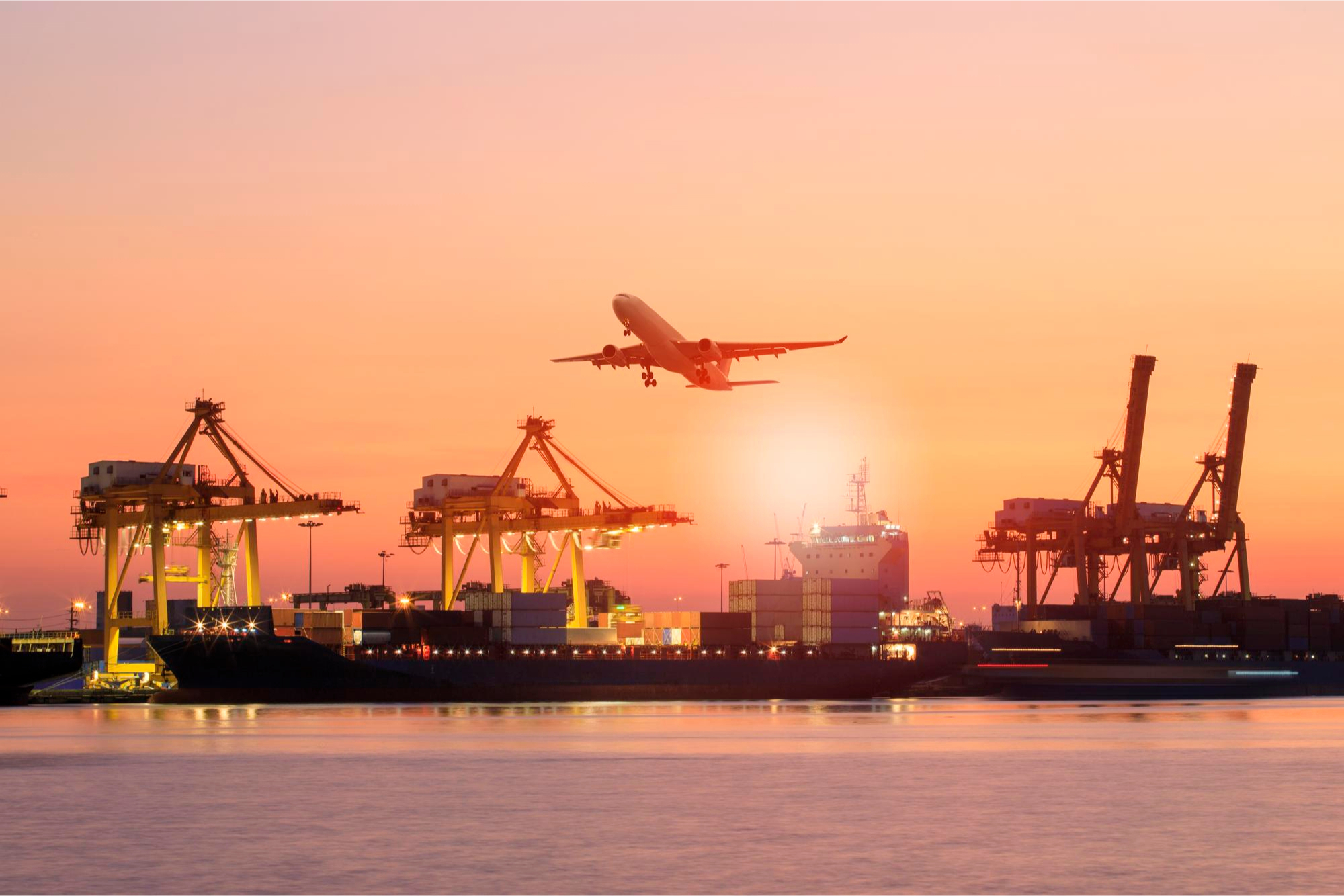
Busiest Routes For Exports From India - Sea And Air
India’s export business is booming as the country becomes one of the most popular destinations for import sourcing. India is one of the top 20 exporting countries in the world, leading in the exports of spices, tea, coffee, and gemstones. The Indian trade market continues to grow, enabling India to achieve a better position in the global trade landscape. The liberalisation of import and export policies has enabled entrepreneurs to start an export business in a hassle-free manner.
Setting Up An Export Business
To start an export business, you must incorporate a valid business operation by opening a bank account with any authorised bank in India. This is crucial to ensuring that you are eligible to deal in foreign exchange. Every expert must get a PAN card for their business. The next vital step is to obtain an IEC code (Importer-Exporter Code), which is mandated by the Foreign Trade Policy of India. You can file an application online at DFGT, paying an application fee of Rs. 500. Exporters can start their operations only after obtaining an RCMC (Registration and Membership Certificate) from the Export Promotion Council, which authorises export businesses in India.
Once the above steps are complete, you should look for foreign buyers who will be interested in buying your goods. Generally, Indian exports send customised samples to acquire importing partners. You must evaluate competitive pricing, considering the export cost and profit margin.
Indian exporters must understand customs tariffs and procedures to run their export business successfully. With a PAN card, export companies can obtain shipping bills for the clearance of export goods. This requires entering the data into the Electronic Data Interchange (EDI) system with a current account from a designated bank. If the export business uses a non-EDI system, the shipping bill and bill of export forms must be filled out and submitted. The duty and tariffs for the export consignment are calculated based on the HS (Harmonised System) code used to classify the goods. This HS code covers almost 98% of international trade goods and 5000 commodities.
The customs duty varies based on the type of export. Different forms of export/shipping bills must be submitted for exporting duty-free goods, dutiable goods, exports under drawbacks, etc. The EDI system allows filing through the Service Centres of Customs. The CHA creates a checklist for data verification. The service centre operator submits the data after verification, and the EDI system generates a shipping bill number. This includes the export declaration, which will be verified at the Appraiser Dock. The customs officer will draw two samples from the consignment, verify the particulars, and enter the data into the ICES/E system.
Key Export Process Steps
India has export restrictions for certain types of agricultural products and goods with potential uses in the military, chemical, and pharmaceutical industries. Understanding these restrictions is necessary so that you can obtain licences and permits to export such goods. The exporters must prepare many documents to clear an export order through the Indian customs department.
- Exporter must present a commercial invoice for the buyer.
- A detailed packing list with details of export products must be produced.
- Shipper or the freight forwarder of the shipper must submit a shipping bill, commercial invoice packing list, or any other required documents as per India import export data 2022 requirements to the customs authoring. The electronic information sharing through the EDI system links directly with the customs office. These forms can also be submitted manually.
- The customs officer will evaluate the documents and release a Let Export Order (LEO) releasing the goods for export. With LEO, exporters can load their shipment to the exporting vessel or aircraft.
- After loading the cargo, the freight forwarder will release an air waybill for air freight or a bill of lading for ocean freight.
- Buyer must possess an airway bill or bill of lading to claim and export goods at the import destination.
Significance Of Trading Routes
The trading route you choose for your export business is an important export strategy that can determine your profit. As you move goods from the home market, you need to identify the optimal route that allows you to supply your products efficiently and in a timely manner to your foreign customers.
Maritime transport is responsible for 70% of India’s trading volumes. For international trade, waterways are the cheapest form of transportation. The inland waterways, roads, and railways in India are well connected to support international trade. The strategic location of India on the international trade map, spanning a coastline of 7,517 km, makes India an ideal destination for import and export businesses.
In FY23, Indian air cargo volume was 1.84 million metric tonnes, including international exports and imports. Foreign air operators are the major players in the Indian air cargo industry. Major changes can be expected in airway logistics as domestic airlines expect the government to create dedicated cargo airports in India to handle different types of cargo. The industry also demands a unified customs policy that can simplify the air transport of shipments. The goal is to achieve air cargo volumes of 10 million metric tonnes by 2030.
Busiest Routes For Exports From India - Sea And Air
The Indian international ocean freight market is expanding with so many players. This gives plenty of options for exporters to choose a carrier and freight forwarder. The key Indian ports that are popular for ocean freight trade in India are Mundra, Nhava Sheva, Chennai, and Kolkata. These ports connect with numerous global ports for exporting goods in containers. The busiest maritime export routes from India are:
- Nhava Sheva to Singapore
- Mundra to Singapore
- Nhava Sheva to Port Klang in Malaysia
- Nhava Sheva to Hong Kong
- Nhava Sheva to Dalian in China
- Kolkata to Bangladesh
- Chennai to Singapore
Exporting by sea is the most cost-effective option for exporters. The transit time varies between 14 days and 45 days based on the destination, choice of freight forwarder, shipping route, etc.
If you want to export high-value goods or goods in smaller quantities, air freight may be the best option for expedited delivery and security. Thousands of flights reach the intended destination per day because many passenger airlines also have dedicated cargo space. The goods are also exported on dedicated cargo planes. The busiest air freight routes from India are:
- Mumbai to Dubai in the UAE
- Mumbai to USA
- Delhi to Dubai
- Cochin to Dubai
- Delhi to Bangkok, Thailand
- Chennai to Kuala Lumpur in Malaysia
- Bangalore to USA
- Delhi to Europe
If you choose direct air freight routes with no transshipments, the delivery will be the fastest. However, such options are minimal. You can always find at least one to two aeroplanes that can export your goods from major Indian airports to European cities. When you export to the Middle East or Asia, you have more options for air freight. The longest routes may have 12 to 18 hours of transit time.
How To Save Money While Safely Exporting Goods?
Your export business can be profitable only if you find the most cost-effective way to export your products. Your foreign customers expect speedy delivery, and the trading route affects the delivery timelines. Shipping by sea is widely preferred by Indian exporters, as long as the goods are not perishable.
Supply chain finance programs allow you to extend payment terms with your suppliers while ensuring they receive early payment through financing arrangements facilitated by the lender. This can help you negotiate better terms with the consignee and conserve cash for other business expenses.
Conclusion
Depending on the trading route you choose, you can deliver your goods in a few hours to 45 days in your export business. When you are a part of the global trade industry, you need to find the right shipping partner that can guarantee the delivery of your cargo on the best terms. You should not forget the importance of insurance and financing when you export goods. By leveraging the services of Ultra Portfolio Management, you can save money while safely exporting goods by optimizing your cash flow, mitigating risks, improving supply chain efficiency, streamlining documentation processes, and accessing expert guidance on export finance and risk management.